Choosing the 2026 best Metal Product Manufacturer requires more than comparing prices or polished websites. Global buyers need evidence of consistent production, documented quality control, and dependable communication. A capable supplier should explain material grades, machining tolerances, surface finishes, and inspection methods in clear terms.
Details matter. A factory visit may reveal organized workstations, calibrated measuring tools, and clearly labeled steel or aluminum stock. Production records should connect each batch to its material certificates and inspection results. Reliable manufacturers also discuss lead times honestly, including possible delays during tooling, sampling, or peak seasons.
Experience remains valuable, but it should be measurable. Buyers can review completed projects, technical drawings, customer references, and photographs of finished components. Independent audits and recognized management certifications may add confidence, although certificates alone never guarantee performance. Practical testing is still necessary.
The strongest Metal Product Manufacturer should support prototypes before large orders. A small sample can expose burrs, uneven coatings, weak welds, or packaging problems early. It can also reveal whether the supplier understands the buyer’s drawings instead of merely accepting them.
No ranking is perfect. Manufacturing conditions change, and even experienced suppliers can make mistakes. That reality deserves attention, not concealment. This guide evaluates manufacturers through product quality, engineering capability, production capacity, compliance awareness, delivery reliability, and after-sales support. It aims to help global buyers make careful decisions based on verifiable evidence, realistic expectations, and long-term cooperation.
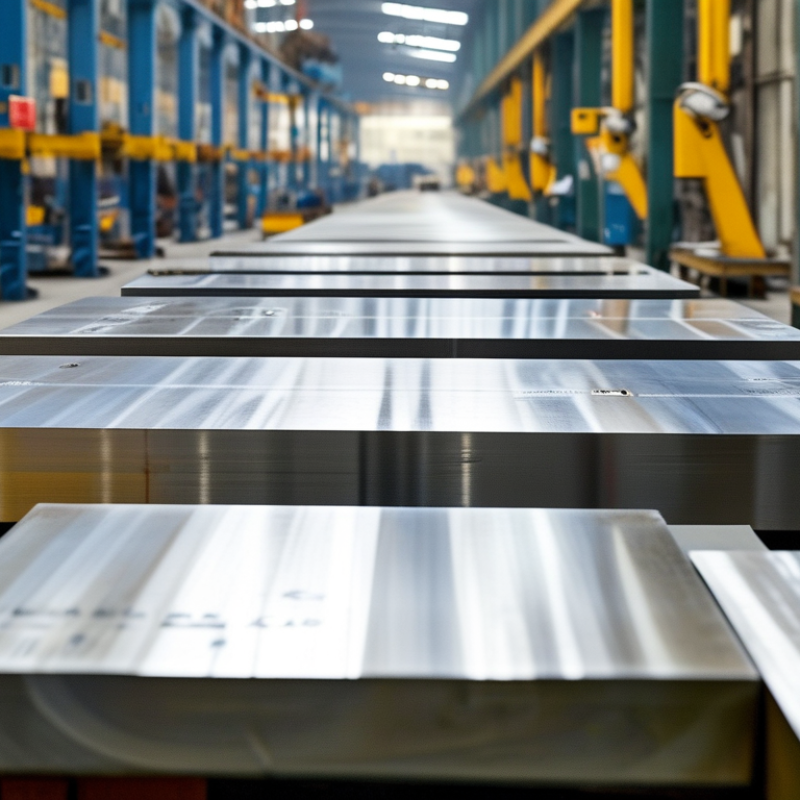
A leading metal product manufacturer must prove more than production capacity. The World Steel Association reported global crude steel output near 1.9 billion tonnes in 2024. That scale increases pressure on material efficiency, defect control, and delivery reliability. Quality must travel. Buyers should expect mill certificates, heat numbers, dimensional records, and photographs from final inspection. These details connect a finished bracket or machined housing to its material source.
Engineering competence also separates dependable suppliers from busy factories. A capable team reviews drawings, identifies weak tolerances, and suggests safer forming or machining methods. The International Energy Agency continues to identify heavy industry as a major decarbonisation challenge. Therefore, manufacturers should disclose energy use, recycled content, and process emissions when reliable data exists. Green claims without measurement remain weak. Sometimes, the honest answer is “data unavailable.” That is better than invented precision.
Reliability needs independent structure. The ISO Survey has recorded more than one million ISO 9001 certificates worldwide, yet certification alone cannot guarantee consistent parts. Auditors and buyers should examine corrective-action records, calibration dates, supplier controls, and batch traceability. A practical factory leaves evidence on the shop floor: labelled coils, protected surfaces, calibrated gauges, and inspection reports that match the shipment. Production plans can still fail. Machines stop, forecasts change, and a perfect schedule is rare. Leading manufacturers show how they recover, communicate delays, and prevent the same failure twice.
2026 Best Metal Product Manufacturer for Global Buyers
Key Manufacturing Capabilities and Product Categories
Global buyers need more than attractive pricing. They need stable processes, clear documentation, and products that perform in real conditions. A capable metal manufacturer should control cutting, stamping, bending, welding, machining, and surface finishing under one quality system. These capabilities reduce handoffs and make design changes easier to manage. Experienced engineers also review drawings before production begins. Small issues in tolerances can become expensive assembly problems.
Common product categories include metal enclosures, brackets, frames, panels, cabinets, fasteners, and custom industrial components. Stainless steel suits corrosion-sensitive environments. Carbon steel offers strength and cost efficiency. Aluminum supports lightweight designs and heat dissipation. Finishes may include powder coating, anodizing, polishing, or controlled plating. Material certificates, inspection records, and batch traceability support reliable purchasing decisions.
Quality should be checked at several points, not only before shipment. Inspectors can verify dimensions with calipers, gauges, and coordinate measuring equipment. Welds require visual checks and, when necessary, non-destructive testing. Packaging also matters. Sharp edges, moisture, and movement can damage finished parts during transport. No factory is flawless. A rejected batch, however, should trigger a documented cause review and corrective action. Delivery forecasts can still change when tooling needs adjustment. Honest communication is better than a perfect-looking promise.
2026 Best Metal Product Manufacturer for Global Buyers
Quality Standards, Certifications, and Production Controls
A dependable metal manufacturer starts with measurable quality standards, not attractive promises. ISO 9001 supports controlled processes, documented inspections, and corrective action. Environmental systems, such as ISO 14001, can also show responsible resource management. Certificates should be current, scope-specific, and independently verifiable. A certificate alone is not enough. Material certificates must match heat numbers, purchase orders, and finished parts. Experienced teams inspect thickness, hardness, dimensions, weld quality, and surface treatment at defined stages. Records matter.
Tips: Ask for sample inspection reports, calibration records, and material traceability evidence. Check whether testing uses recognized methods. Confirm who approves nonconforming products. Request recent production photos or a controlled factory visit when practical.
Production control should connect engineering, purchasing, machining, finishing, and final packing. Statistical process control can reveal drift before defects spread. Coordinate measuring machines help confirm critical tolerances. Coating thickness gauges support consistent protection on exposed surfaces. Packaging checks also matter because corrosion or impact can begin after inspection. A rushed audit may hide weaknesses. No system is perfect, so reliable manufacturers review failures openly and improve procedures. Buyers should compare actual controls with contract requirements, because a polished quality manual cannot replace disciplined daily work.
| Evaluation Dimension | Recognized Standard or Reference | Recommended Production or Quality Control | Objective Evidence for Global Buyers |
|---|---|---|---|
| Quality management system | ISO 9001:2015 | Controlled procedures for purchasing, production, inspection, nonconformity handling, corrective action, and customer feedback. | Valid certificate issued by an accredited certification body, documented procedures, and internal audit records. |
| Environmental management | ISO 14001:2015 | Identification of environmental aspects, legal obligations, waste controls, energy monitoring, and improvement objectives. | Certificate scope, environmental objectives, waste-disposal records, and documented compliance evaluations. |
| Occupational health and safety | ISO 45001:2018 | Risk assessments for cutting, stamping, machining, welding, heat treatment, lifting, and chemical handling. | Certificate scope, training records, incident statistics, emergency drills, and equipment inspection logs. |
| Raw-material traceability | EN 10204 inspection documents; applicable ASTM, EN, JIS, or GB material specifications | Maintain heat, lot, coil, or batch identification from incoming material through cutting, forming, machining, finishing, and shipment. | Material certificates, receiving inspection reports, heat-number records, and packing-list cross-references. |
| Chemical composition verification | Applicable product specification; ASTM E415 or ASTM E1086 where appropriate | Verify alloy chemistry using supplier documentation and, when specified by risk or contract, positive material identification or laboratory analysis. | Mill test certificate, PMI report, laboratory test report, and calibrated instrument records. |
| Dimensional inspection | Drawing tolerances; ISO 2768 or a specified geometric tolerancing standard when applicable | Use approved drawings, calibrated gauges, coordinate measuring machines, optical measurement, and first-article inspection for new parts. | Inspection plan, first-article report, dimensional layout, gauge calibration certificates, and sampling records. |
| Welding quality | ISO 3834-2 or ISO 3834-3; ISO 15614 for procedure qualification where applicable | Control qualified welding procedures, welder qualifications, preheat, interpass temperature, filler materials, and weld parameters. | Welding procedure specifications, procedure qualification records, welder qualification records, and weld inspection reports. |
| Nondestructive testing | ISO 9712 personnel qualification; ISO 17635 for weld NDT selection and application | Apply visual, dye penetrant, magnetic-particle, ultrasonic, or radiographic testing according to design risk and purchase-order requirements. | NDT procedure, qualified operator records, equipment calibration, test coverage, and acceptance results. |
| Heat treatment control | Material-specific specification; applicable ASTM, EN, or customer process requirements | Control furnace recipe, loading pattern, temperature uniformity, time at temperature, cooling method, and batch identification. | Furnace charts, batch records, temperature calibration, hardness results, and metallurgical test reports when required. |
| Surface treatment and coating | ISO 12944 for corrosion-protection systems; ISO 2178 or ISO 2360 for coating-thickness measurement where applicable | Control surface preparation, cleanliness, profile, coating type, wet or dry film thickness, curing conditions, and visual defects. | Surface-preparation records, coating inspection reports, thickness readings, adhesion tests, and batch information. |
| Mechanical performance | Applicable material standard; ISO 6892-1 for metallic tensile testing; ISO 6507 or ISO 6508 for hardness testing | Test tensile strength, yield strength, elongation, hardness, impact resistance, or other properties specified by the product standard. | Laboratory reports showing specimen identification, test method, equipment status, and acceptance criteria. |
| Regulatory and chemical compliance | REACH and RoHS requirements where applicable to the product and destination market | Assess restricted substances in metallic materials, platings, coatings, lubricants, and packaging according to the buyer’s market requirements. | Supplier declarations, restricted-substance test reports, safety data sheets, and compliance statements. |
| Inspection sampling and release | ISO 2859-1 for attribute sampling when an AQL-based plan is contractually selected | Define inspection level, sample size, critical-major-minor classification, acceptance criteria, and release authority before production. | Approved inspection plan, sampling records, nonconformance reports, and final-release checklist. |
| Packaging and export protection | ISPM 15 for regulated solid-wood packaging; agreed export-packaging specification | Protect against corrosion, impact, moisture, contamination, and deformation during multimodal international transport. | Packaging approval, photographs, weight and dimension records, corrosion-protection details, and shipping marks. |
| Continuous improvement | ISO 9001 improvement principles; customer-specific performance requirements | Track defect rates, on-time delivery, corrective-action closure, recurring failures, and process capability for critical characteristics. | Trend reports, root-cause analysis, corrective-action records, process-capability studies, and management-review outputs. |
Note: Certification and testing requirements depend on the product, material, design risk, destination market, and purchase contract. Standards should be verified against the latest edition and the applicable certification scope before qualification.
2026 Best Metal Product Manufacturer for Global Buyers
How Global Buyers Evaluate Suppliers and Export Readiness
Global buyers rarely choose a metal supplier from product photos alone. They examine process control, material records, and communication speed. A reliable manufacturer should provide mill certificates, dimensional reports, and traceable batch numbers. These documents connect the finished part to its raw material.
Production experience becomes visible during technical discussions. Skilled teams ask about tolerances, surface finish, loading conditions, and expected service environments. They should explain cutting, forming, welding, machining, and inspection limits clearly. Sample approval matters too. A small trial order can reveal warping, inconsistent coating, or weak packaging. I have seen suppliers perform well in sampling but struggle during volume production. That gap deserves direct questions.
Export readiness involves more than shipping capacity. Buyers should check export documents, packing methods, labeling accuracy, and container loading plans. Moisture protection is important for long ocean routes. Wooden crates, separators, edge protection, and weight records can prevent avoidable claims. The supplier should confirm Incoterms, lead times, inspection points, and corrective-action procedures in writing. Language can still create problems. Even experienced teams sometimes interpret “finished” differently. Clear drawings and signed specifications reduce that risk. Independent pre-shipment inspection may add cost, but it can expose defects before cargo leaves the factory. Reliability is built through evidence, not confident promises.
The best metal product manufacturer in 2026 will be judged by more than price and surface finish. Sustainability is becoming a production requirement. The International Energy Agency reports that iron and steel create about 7% of global energy-related carbon dioxide emissions. Manufacturers must therefore measure furnace energy, scrap content, water use, and transport emissions. Renewable electricity, electric furnaces, and closed-loop cooling systems can reduce impact, but results depend on local power sources. Green claims need evidence.
Technology is changing quality control. Automated vision systems can detect scratches, cracks, and dimensional errors before shipment. Digital production records can connect each batch to its alloy grade, heat treatment, and inspection results. The World Bank estimates that mineral production may rise by nearly 500% by 2050 to support clean-energy technologies. This creates pressure on traceability and responsible sourcing. Yet technology is not a cure. Poor calibration, weak worker training, or incomplete supplier data can still produce unreliable results. That uncomfortable gap deserves attention.
Tips: Ask for third-party certifications, recycled-content records, and recent test reports. Check whether carbon data covers the full product lifecycle. Request sample inspections before large orders. Compare defect rates, delivery consistency, and corrective-action speed, not only quotations. A capable manufacturer should explain its limitations clearly. Silence is a warning. Industry forecasts are useful, but factory evidence matters more.
: Look for cutting, stamping, bending, welding, machining, and surface finishing. One quality system helps reduce handoffs and production errors. Engineers should review drawings before production starts. Small tolerance issues can cause expensive assembly problems.
Common products include enclosures, brackets, frames, panels, cabinets, fasteners, and custom components. Product details should match the intended operating environment. A clear drawing helps prevent misunderstandings.
Stainless steel suits corrosion-sensitive environments. Carbon steel provides strength and cost efficiency. Aluminum supports lighter designs and heat dissipation. The cheapest material may not perform well outdoors.
Common finishes include powder coating, anodizing, polishing, and controlled plating. The correct finish depends on exposure, appearance, and durability requirements. Ask for coating thickness records when protection matters.
Request dimensional reports, material certificates, and batch traceability records. Inspectors may use calipers, gauges, and coordinate measuring equipment. Welds need visual checks. Critical welds may require non-destructive testing.
Useful documents include inspection reports, calibration records, material records, and packing details. Material records should match heat numbers and purchase orders. A certificate alone is not enough. Records matter.
Yes, a small trial order can reveal warping, coating variation, or weak packaging. Sampling does not guarantee perfect volume production. I have seen that gap happen. Ask how production controls will remain consistent.
Confirm export documents, labels, packing methods, weight records, and loading plans. Moisture protection matters during long ocean routes. Separators, edge protection, and strong crates protect finished parts. Packaging can fail too.
Confirm lead times, inspection points, and corrective actions in writing. Tooling adjustments can change delivery forecasts. Honest updates are better than perfect-looking promises. No factory is flawless.
In 2026, a leading Metal Product Manufacturer is defined by more than production capacity. Global buyers look for suppliers that combine engineering expertise, consistent quality, flexible customization, and reliable delivery. Key capabilities may include precision cutting, forming, machining, welding, surface treatment, assembly, and the production of components for construction, industrial equipment, transportation, energy, and consumer applications. A strong manufacturer should also maintain clear quality standards, documented inspection procedures, traceability, process controls, and relevant international certifications.
For global buyers, export readiness depends on stable lead times, transparent communication, secure packaging, accurate documentation, and proven experience managing international orders. Sustainability is becoming equally important, encouraging manufacturers to reduce waste, improve energy efficiency, use recyclable materials, and adopt responsible sourcing practices. Advanced automation, digital production monitoring, data-based quality management, and smart factory technologies are further shaping the industry. By evaluating capability, compliance, sustainability, and long-term cooperation potential together, buyers can select a dependable manufacturing partner for changing global market needs.

Xiang Xin Yu