Aluminum Milling Parts are widely used in automation equipment, electronics housings, transport systems, and industrial machinery. Their quality depends on more than the alloy name. Tool paths, workholding, cutting conditions, and inspection methods can all affect dimensional accuracy and surface finish. A milled mounting plate, for example, may need flat contact faces, clean threaded holes, and consistent spacing between features. Details matter.
This guide introduces ten manufacturers in China for buyers comparing machining capabilities and supplier fit. It considers practical factors such as CNC equipment, material options, tolerance control, finishing services, production capacity, and communication. These points can help narrow a shortlist, but they do not replace a drawing review or a supplier audit. Ask how critical dimensions are measured, what inspection records are available, and whether samples can be checked before a larger order. Not always.
A supplier that suits a prototype may not be the right choice for recurring production. Likewise, a low quoted price may exclude finishing, packaging, or additional inspection. The companies featured here should therefore be viewed as candidates, not a universal ranking. Requirements differ by part geometry, quantity, industry, and delivery schedule. Compare evidence, request clear quotations, and confirm specifications in writing before making a sourcing decision.
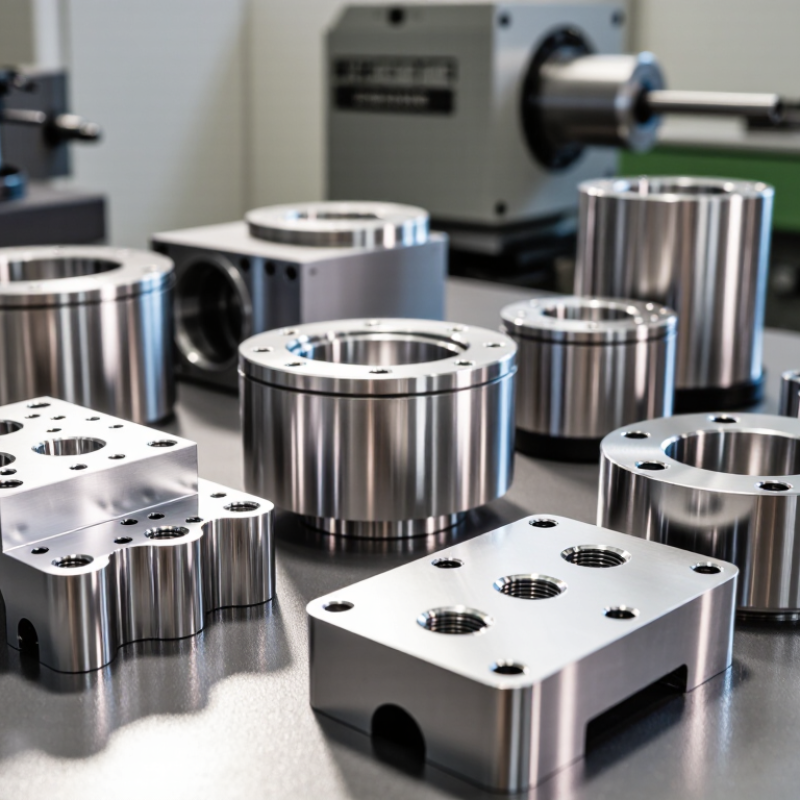
Aluminum milling parts are components shaped by rotating cutters that remove material from a solid billet. Common examples include equipment brackets, housings, heat sinks, and precision plates. Their low weight and useful strength make aluminum alloys popular, but each alloy cuts differently. Engineers select the alloy and temper to balance strength, corrosion resistance, finish, and machining time.
Production typically starts with a drawing and a stock billet. A CNC mill follows programmed tool paths, cutting pockets, holes, slots, and edges. Coolant helps control heat, while sharp tools and stable workholding reduce burrs and chatter. After milling, parts may be deburred, inspected, or surface-treated. Small details matter. A thin wall can flex under cutter pressure. A tight tolerance can also raise cost. One practical caution: recycled content alone does not guarantee consistent machining; alloy and temper still need verification. The International Aluminium Institute’s report Aluminium Recycling: The Facts states that recycling aluminium requires about 95% less energy than producing primary aluminium, though actual savings depend on the process and material stream.
Tips: Confirm critical dimensions, surface-finish requirements, and alloy specifications before quoting. Ask how the supplier checks flatness and hole positions. Chips matter. Clean chip evacuation helps protect the finish and maintain predictable cuts. Even good drawings sometimes miss a tool-access problem; review the machining setup before production.
Aluminum milling parts are components shaped by removing material with rotating cutting tools. Alloy choice affects the strength and performance of the finished part. The chart shows representative tensile strength values; actual properties vary with product form, thickness, and applicable specifications. Higher tensile strength does not necessarily mean an alloy is easier to machine.
Evaluating an aluminum milling parts manufacturer starts with the details of its process. Ask which alloys and tempers it routinely machines, such as 6061-T6, and how it controls distortion during cutting. A capable supplier should explain its workholding, tool choices, and inspection steps in clear terms. Request sample inspection reports, not just a list of machine types. Small details matter. Check whether dimensions, flatness, hole positions, and thread quality are measured against your drawing. A thread gauge or coordinate-measuring report can reveal more than a polished photograph.
Quality systems matter, but they do not replace direct evidence. Review how the manufacturer handles material certificates, batch traceability, and nonconforming parts. For a production trial, inspect actual components for burrs, tool marks, and sharp edges, especially around pockets and cross-holes. If anodizing or another finish is required, confirm who performs it and how coating thickness affects critical fits. Lead time deserves the same scrutiny: ask what changes when material availability or machine capacity shifts. Compare quotes with identical specifications and tolerances. A very low price may reflect a different inspection scope, though that is not always obvious. No scorecard is perfect. A clear conversation about one failed sample can sometimes tell you more than a long capability brochure.
The ten profiles below describe practical supplier types, not named endorsements. Profile 1 is a Pearl River Delta shop focused on small, intricate CNC parts. Profile 2 is a Yangtze Delta precision workshop with multi-axis capacity. Profile 3 links aluminum extrusion to machining, reducing handling for long components. Profile 4 handles short-run, high-mix orders; setup time can still raise costs. Profile 5 uses automated cells for repeat production. A shop-floor visit helps.
Profile 6 specializes in corrosion-conscious parts, where alloy choice and surface finish matter. Profile 7 combines casting and milling for complex shapes. Profile 8 serves demanding tolerance work, but request inspection records rather than relying on claims. Profile 9 machines large plates and frames, requiring careful checks for flatness. Profile 10 offers machining and finishing under one roof, which may simplify coordination.
The International Aluminium Institute reported about 70.6 million tonnes of global primary aluminum production in 2023, with China producing roughly 41.6 million tonnes. That is useful context, not proof of machining capacity.
A clean brochure proves little. Compare sample parts, dimensional reports, material traceability, and delivery performance; regional reputation alone is a rough guide.
China’s aluminum milling suppliers serve customers that need lightweight, accurately machined components. The National Bureau of Statistics of China reported 41.6 million tonnes of electrolytic aluminum production in 2023. Scale is significant, but it does not guarantee machining quality. Buyers should assess the actual equipment, process controls, and inspection records at each facility.
Many manufacturers offer three-, four-, and five-axis CNC milling for housings, brackets, heat sinks, and structural parts. Common capabilities include machining aluminum billet or castings, deburring edges, and checking dimensions with coordinate-measuring machines. Fit matters. Automotive and automation customers often need repeatable hole positions and flat mounting surfaces; electronics makers may prioritize thin walls and heat dissipation. Medical and aerospace projects usually require tighter documentation and traceability, subject to the supplier’s verified scope. The International Aluminium Institute reported global primary aluminum production of about 70.6 million tonnes in 2023. That figure shows the material’s industrial scale, not any individual factory’s competence. Still, capability claims can be uneven. Request sample inspection reports, material certificates, and a production trial before approving critical parts.
The entries below are anonymized, illustrative supplier profiles—not a verified ranking or claims about specific companies. Capabilities and tolerances vary by supplier, part design, material, and inspection method; confirm details directly before sourcing.
| Profile | Typical Milling Capabilities | Common Aluminum Alloys | Part Types | Industries Served | Finishing and Quality Options |
|---|---|---|---|---|---|
| Profile 01 | 3-axis CNC milling; drilling, tapping, and pocketing | 6061-T6, 6063 | Mounting plates, brackets, housings | Industrial equipment, automation | Deburring, anodizing coordination, dimensional inspection |
| Profile 02 | 3-axis and 4-axis milling; contour machining | 6061-T6, 7075-T6 | Structural components, adapter blocks | Aerospace supply chains, robotics | Surface-finish options, coordinate-measuring inspection on request |
| Profile 03 | 3-axis CNC milling; production runs from prototype to repeat orders | 6061, 6082 | Enclosures, panels, heat-sink blanks | Electronics, telecommunications | Anodizing or powder-coating coordination; visual and dimensional checks |
| Profile 04 | 4-axis milling; multi-face machining with reduced repositioning | 6061-T6, 7075-T6 | Instrument bodies, valve blocks, fixtures | Medical equipment, fluid control | Deburring, cleaning, inspection against customer drawings |
| Profile 05 | 3-axis and 5-axis milling, depending on part geometry | 7075-T6, 6061-T6 | Complex brackets, lightweight structural parts | Aerospace, motorsport, precision engineering | CMM inspection and material documentation by agreement |
| Profile 06 | CNC milling with turning available for combined features | 6061, 6082, 7075 | Flanges, hubs, connectors, machined fittings | Automotive, machinery, energy equipment | Anodizing, passivation where applicable, final inspection |
| Profile 07 | CNC milling of extruded profiles; drilling and end machining | 6063, 6061 | Frames, rails, brackets, equipment sections | Solar equipment, construction, factory automation | Anodizing and powder coating through qualified finishing processes |
| Profile 08 | High-speed CNC milling for thin-wall and detailed components | 6061-T6, 5052 | Covers, chassis panels, lightweight enclosures | Consumer electronics, communications hardware | Edge finishing, cosmetic inspection, coating options by specification |
| Profile 09 | CNC milling with prototype and low-volume production support | 6061, 7075, 5052 | Custom brackets, prototypes, test fixtures | Product development, research equipment, industrial design | First-article checks and inspection reports on request |
| Profile 10 | 3-axis to 5-axis milling, selected by geometry and production needs | 6061-T6, 6082, 7075-T6 | Precision housings, manifolds, machine components | Automation, transportation, industrial machinery | Dimensional inspection, deburring, finishing to drawing requirements |
When comparing manufacturers for an aluminum milling project, begin with the part drawing, not the headline price.
Check whether each supplier can hold the specified tolerances across the full batch. Ask how they measure critical features, such as a 0.02-millimeter bore or a flat mounting face. Ask for evidence. Inspection records and a sample part can reveal more than a polished capability list.
Compare quotes using the same alloy, quantity, finish, and packaging requirements. A low price may exclude deburring, anodizing, or tighter inspection. Clarify who supplies material certificates and how any dimensional issue is handled.
Small details matter.
Also review machine capacity, expected lead time, and the supplier’s process for managing drawing revisions. Clear answers are useful; vague promises are not. The cheapest quote can still be the right choice, but only if its assumptions match your project. That distinction is easy to miss.
For a complex part, request a first-article inspection and examine tool marks, edge quality, and hole alignment before approving production. A short technical discussion can expose gaps that a spreadsheet will not.
Start with your part drawing and required tolerances. Compare relevant sample parts, inspection records, material traceability, and delivery performance. Ask for proof.
Use the same alloy, quantity, surface finish, and packaging requirements for each quote. Check whether deburring and tighter inspection are included. Details matter.
A sample can reveal tool marks, rough edges, and misaligned holes before full production. It offers practical evidence beyond a capability list.
Ask how critical features are measured, such as a 0.02-millimeter bore or a flat mounting face. Request inspection records for those features.
A supplier that handles both extrusion and machining may reduce handling for long components. Confirm its process fits your drawing and tolerances.
Ask how the supplier checks flatness across the part. A mounting face can look fine at one point and still be uneven elsewhere.
No. National production figures provide context, not evidence of machining capacity. Review the supplier’s equipment, samples, and inspection results instead.
Confirm lead time, material certificates, drawing revision control, and how dimensional issues are handled. That can be overlooked. A short technical discussion may expose gaps.
This article explains what Aluminum Milling Parts are and how they are produced, from selecting suitable aluminum stock to CNC milling, finishing, and quality inspection. It also outlines practical criteria for evaluating manufacturers, including machining precision, equipment and process capabilities, material traceability, quality control, production capacity, communication, and delivery reliability.
The article profiles ten manufacturers in China without focusing on brand promotion, then compares the capabilities and industries each type of supplier may serve. Readers will find guidance on matching a manufacturer to their project by considering part complexity, tolerances, order volume, surface requirements, lead time, and budget. The goal is to help buyers ask informed questions, assess options consistently, and choose a manufacturing partner whose capabilities fit their technical and production needs.

Xiang Xin Yu