Top China Machine Parts Manufacturers for Global Buyers

Time:2026-10-22 Author:Aria
0%

China Machine Parts manufacturers now serve demanding buyers in automotive, robotics, energy, construction, and industrial automation. The opportunity is substantial, but supplier selection requires more than comparing unit prices. UNIDO’s International Yearbook of Industrial Statistics identifies China as the world’s largest manufacturing economy by industrial value added. WTO trade statistics also show China remained the leading merchandise exporter in 2023, with machinery and transport equipment forming a major export category. These figures show scale, not automatic quality.

Industry evidence points toward a more careful evaluation. The China Machine Tool Industry Association reported continued demand for high-end, automated, and digitally connected equipment, while Deloitte’s advanced manufacturing research highlights traceability, process control, and resilient supply networks. A capable parts supplier should therefore provide material certificates, dimensional inspection records, process capability data, and clear corrective-action procedures. Ask for samples.

As manufacturing quality expert W. Edwards Deming stated, “Quality comes not from inspection, but from the improvement of the production process.” His principle remains relevant when assessing China Machine Parts suppliers. Strong manufacturers control machining parameters before a final inspection catches defects. They also explain tolerances clearly, protect drawings, and communicate production risks early. Still, no ranking can replace an audit. Factory conditions change, certifications can expire, and a polished website proves little. This guide compares leading manufacturers through practical signals, including engineering experience, equipment, quality systems, export performance, responsiveness, and evidence from real production projects. Reliability must be verified, not assumed.
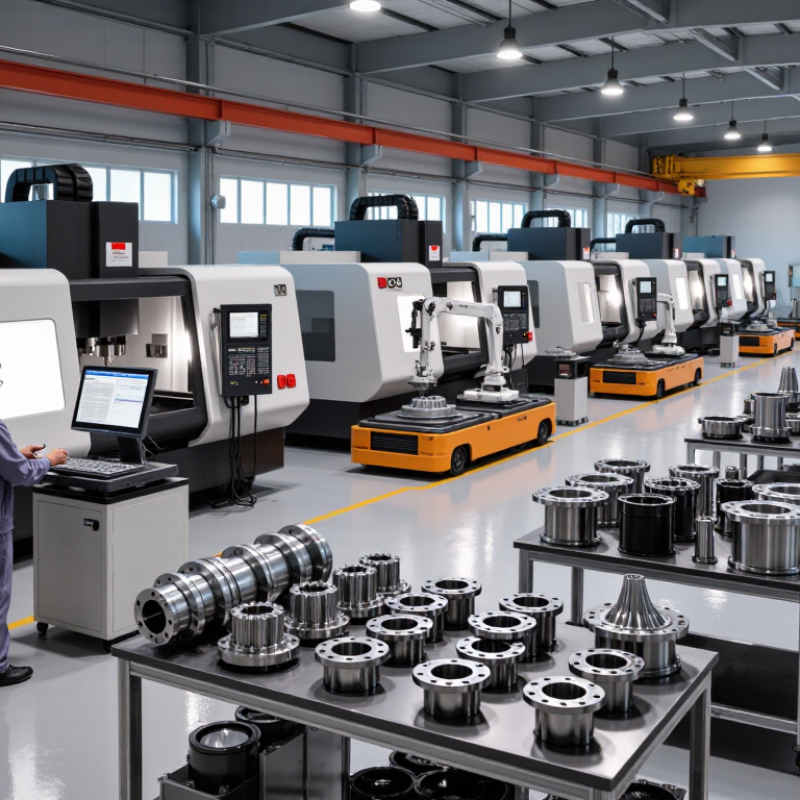
Top China Machine Parts Manufacturers for Global Buyers

Types of Machine Parts Manufactured in China

Top China Machine Parts Manufacturers for Global Buyers

China’s machine parts industry covers many production types. CNC machined parts suit housings, brackets, and precision shafts. Cast iron and aluminum castings support pump bodies, frames, and valve components. Forged steel parts offer strength for gears, connecting rods, and heavy-duty fasteners. Sheet metal manufacturers produce covers, guards, panels, and formed enclosures. Injection-molded engineering plastics also serve low-friction guides and protective components. Each process affects cost, strength, surface finish, and delivery time.

Experienced buyers should examine drawings, material certificates, and inspection records before placing an order. Ask how manufacturers control tolerances during cutting, heat treatment, grinding, and final assembly. A reliable supplier can explain measuring equipment, sampling plans, and corrective actions clearly.

However, no factory is perfect. I have seen a visually clean part fail because a hidden bore was slightly undersized. This is why practical testing matters more than attractive samples.

Tips: Share 3D files, 2D drawings, target quantities, and operating conditions. Request first-article samples before mass production. Confirm packaging for sharp edges and moisture-sensitive surfaces. Keep one approved sample for future comparison. Also question unclear promises. A low quotation may hide weaker material, loose tolerances, or incomplete inspection. Small details matter.

Key Factors for Evaluating Chinese Machine Parts Manufacturers

Global buyers should evaluate Chinese machine parts manufacturers beyond price and catalog breadth. The World Bank’s 2023 Logistics Performance Index gave China a score of 3.7 out of 5. This suggests strong logistics capability, but delivery performance still requires supplier-level verification. Ask for recent on-time delivery records, production capacity, and backup plans for material shortages.

Technical control matters more than polished factory photos. Request ISO 9001 certificates, calibration records, material certificates, and inspection reports linked to each batch. The International Federation of Robotics reported 470 industrial robots per 10,000 manufacturing workers in China in 2023. This indicates substantial automation potential, yet automation does not guarantee stable tolerances. Check actual samples with a coordinate measuring machine. Review surface finish, hardness, thread accuracy, and dimensional drift across several lots. A cheap quote can still be expensive.

Communication is another practical test. Send a drawing with three controlled dimensions and one ambiguous note. Observe whether the manufacturer asks precise questions. Reliable suppliers should explain tooling limits, tolerance risks, packaging methods, and corrective-action procedures. Request a small pilot order before approving volume production. I would also compare inspection data from the first and third batches; one batch can hide weak process control. This step feels slow. It often prevents rework, customs delays, and production stoppages. According to the ISO Survey of Management System Standards, ISO 9001 remains one of the world’s most widely adopted quality standards, but certification should support evidence, not replace it.

Leading Regions and Industrial Clusters in China

China’s machine-parts base is regional, not uniform. The Yangtze River Delta, centered on Shanghai, Jiangsu, Zhejiang, and Anhui, combines precision machining, bearings, molds, automation, and surface treatment. The Pearl River Delta in Guangdong is strong in CNC work, electronics hardware, die casting, and rapid tooling. The Bohai Rim adds heavy equipment, steel processing, and industrial components. Sichuan, Hubei, and Hunan are increasingly relevant for hydraulics, engines, and construction machinery.

Scale supports these clusters. The World Bank’s World Development Indicators report China’s manufacturing value added at approximately US$4.6 trillion in 2023. UNIDO’s International Yearbook of Industrial Statistics 2024 also places China near one-third of global manufacturing value added. These figures describe capacity, not automatic quality. Buyers should still verify ISO 9001 systems, material certificates, first-article inspection, process capability, and export packaging. Ask for samples from the actual production line.

Location changes landed cost. A coastal supplier may offer dense subcontracting and faster ocean access. An inland supplier may reduce labor pressure, but add trucking time to a seaport. In supplier audits, the strongest evidence is often physical: calibrated gauges, marked bins, controlled drawings, and inspection records beside the machine. Small details matter. Cluster labels can mislead. Some factories outsource heat treatment or plating without clear traceability. Request subcontractor lists, batch records, and corrective-action history before approving production. The weak point is often not machining; it is handoff control.

Quality Standards, Certifications, and Production Capabilities

Top China Machine Parts Manufacturers for Global Buyers

Quality begins with controlled process, not a polished website. Reliable manufacturers should explain their inspection methods, material controls, and production limits clearly. ISO 9001 certification can indicate a structured quality system, but buyers should verify its scope and validity. Certificates matter.

Ask for material certificates, dimensional inspection reports, and batch traceability records. For critical parts, coordinate first-article inspection before approving mass production. A coordinate measuring machine can confirm tight dimensions, while surface roughness testing checks functional finishes. Small details reveal process discipline.

Production capability also deserves direct questions. Review CNC equipment, casting or forging capacity, heat-treatment control, and secondary finishing resources. Ask how operators manage tool wear and calibration intervals. These issues affect consistency across thousands of parts. Very few suppliers are perfect. That deserves honesty.

Some factories provide strong machining accuracy but weaker documentation. Others communicate well but outsource important processes without clear oversight. This is where supplier audits, sample testing, and corrective-action records become valuable. Request evidence rather than promises. Compare drawings, tolerances, inspection frequency, packaging methods, and lead-time assumptions before placing a large order. An experienced manufacturer will discuss risks openly, including tolerances that may be difficult to hold economically. That conversation can prevent expensive rework and delayed assembly.

Top China Machine Parts Manufacturers for Global Buyers - Quality Standards, Certifications, and Production Capabilities

Anonymized capability comparison for international sourcing and supplier qualification

Manufacturer Type Primary Processes Typical Materials Typical Dimensional Capability Common Production Volume Relevant Quality Standards Common Certifications Recommended Buyer Verification
Precision CNC Machining 3-axis to 5-axis milling, CNC turning, drilling, tapping, grinding Aluminum, stainless steel, carbon steel, brass, copper, titanium, engineering plastics Typical tolerance: ±0.01 mm to ±0.05 mm; tighter tolerances require process-specific validation Prototype, low-volume, and medium-volume production ISO 2768, ISO 1101 GD&T, ISO 286 fits, customer drawings and inspection plans ISO 9001; ISO 14001 or IATF 16949 may apply depending on market served Request capability studies, CMM reports, material certificates, first-article inspection, and sample parts
CNC Turning and Swiss-Type Parts Automatic turning, Swiss machining, threading, knurling, milling, and secondary finishing Brass, stainless steel, alloy steel, aluminum, copper, POM, nylon, and other machinable plastics Typical diameter range: approximately 0.5–65 mm; tolerance commonly ±0.01 mm to ±0.05 mm Medium- to high-volume production of repeat parts ISO 2768, ISO 1101, thread standards such as ISO metric and Unified threads ISO 9001; IATF 16949 may be required for automotive supply chains Verify bar-feeder capacity, tool-life controls, automatic gauging, traceability, and statistical process control
Sheet Metal Fabrication Laser cutting, turret punching, CNC bending, welding, riveting, and assembly Carbon steel, stainless steel, aluminum, galvanized steel, and copper alloys Typical sheet thickness: 0.5–12 mm; bend accuracy depends on material, tooling, and geometry Prototype, small-batch, and medium-volume production ISO 2768, ISO 9013 for thermal cutting quality, ISO 2553 for welding symbols ISO 9001; ISO 3834 may apply to controlled welding operations Check weld procedure qualifications, coating thickness reports, bend samples, and dimensional inspection records
Aluminum Die Casting High-pressure die casting, trimming, shot blasting, CNC machining, and surface finishing Common aluminum alloys such as ADC12, A380, and equivalent EN or ASTM grades Suitable for thin-wall, complex shapes; final accuracy often improves after machining Medium- to high-volume production after tooling approval ASTM, EN, or JIS alloy specifications; customer-defined porosity and pressure-leak criteria ISO 9001; IATF 16949 is relevant for automotive programs Request X-ray or CT inspection where applicable, density checks, leak testing, and die-life records
Investment Casting Wax pattern production, ceramic shell investment, precision casting, heat treatment, and machining Stainless steel, carbon steel, tool steel, nickel alloys, and selected aluminum alloys Complex near-net shapes; machining is normally used for critical datums and interfaces Prototype through medium-volume production ASTM, EN, or customer-specific casting, heat-treatment, and NDT requirements ISO 9001; ISO 14001 and industry-specific approvals may apply Review chemical analysis, tensile results, radiographic or dye-penetrant testing, and heat-treatment charts
Cold Forging and Metal Forming Cold heading, upsetting, thread rolling, stamping, extrusion, and secondary machining Carbon steel, stainless steel, alloy steel, aluminum, copper, and brass High repeatability for fasteners and small formed components; final tolerances depend on tooling and secondary operations High-volume production with dedicated tooling ISO 898-1 for mechanical properties of carbon-steel fasteners; ISO 965 for metric threads ISO 9001; IATF 16949 may apply to automotive fastener programs Confirm die design capability, thread gauges, hardness testing, coating compliance, and lot traceability
Plastic Injection Molding for Mechanical Components Injection molding, insert molding, overmolding, ultrasonic welding, and assembly ABS, PC, PA, POM, PBT, PP, PE, TPU, and glass-fiber-reinforced polymers Suitable for repeatable complex shapes; shrinkage and warpage must be controlled during tool and process validation Medium- to high-volume production after mold qualification ISO 20457 for plastic moulded parts; material-specific ASTM, ISO, or UL requirements ISO 9001; ISO 13485 may apply to medical-device component suppliers Review mold-flow analysis, material certificates, first-article reports, cycle-time data, and dimensional capability
Surface Treatment and Finishing Specialist Anodizing, electroless nickel, zinc plating, passivation, powder coating, e-coating, polishing, and marking Aluminum, stainless steel, carbon steel, brass, zinc, and finished machined components Coating thickness and appearance are controlled by process parameters, substrate condition, and inspection method Prototype through high-volume batch processing ISO 2081 for zinc coatings, ISO anodizing references, ASTM B117 for salt spray testing, and customer specifications ISO 9001; ISO 14001 is relevant because of chemical and environmental controls Verify coating thickness, adhesion, color or gloss measurement, corrosion testing, restricted-substance controls, and wastewater compliance
Buyer Qualification Note: Certification availability varies by facility, product category, and target market. Buyers should confirm certificate scope, issuing-body validity, expiration date, applicable production site, material traceability, inspection equipment, and the supplier’s ability to meet the exact drawing and regulatory requirements.

How Global Buyers Can Select and Work With Chinese Suppliers

China’s machine-parts sector offers deep capacity, but selection requires more than comparing quotations. The WTO’s World Trade Statistical Review 2024 reports approximately US$3.6 trillion in Chinese merchandise exports during 2023. This scale suggests strong industrial depth, not automatic supplier reliability. Global buyers should verify machining equipment, inspection methods, material traceability, and export experience.

Send complete drawings with tolerances, surface finishes, materials, and annual volumes. Ask for a first-article sample before approving mass production. A capable supplier should explain its process clearly, including cutting parameters, heat treatment, and final inspection records.

Review certificates, but do not trust documents alone. An on-site audit or independent inspection can expose weak controls. I have seen excellent samples fail during larger batches. That risk deserves written controls, not optimism. Contracts should define acceptance standards, delivery milestones, packaging, payment terms, and corrective actions.

Tips: Compare three qualified suppliers using the same drawing and inspection checklist. Measure critical dimensions independently. Keep one approved sample as a production reference. Use video audits when travel is difficult, though they cannot replace physical verification. The ISO Survey of Management System Standard Certifications 2023 recorded millions of ISO 9001 certificates worldwide, yet certification still does not prove every part meets your specification. Clear communication matters. Short weekly updates often prevent expensive misunderstandings.

FAQS

What types of machine parts can Chinese manufacturers produce?

Common products include CNC housings, brackets, shafts, castings, gears, panels, and molded guides. Each process affects strength, finish, cost, and delivery time.

What information should I send before requesting a quotation?

Provide 3D files, 2D drawings, material grades, quantities, and operating conditions. Include critical tolerances. Clear details reduce guessing and rework.

How can I verify a part’s dimensional quality?

Request first-article samples and inspection reports linked to each batch. Check bores, threads, hardness, surface finish, and critical dimensions. A clean-looking part can still fail.

Does factory automation guarantee consistent tolerances?

No. Automated machines can still use poor programs, worn tools, or weak process controls. Review calibration records and measure parts from several production lots. Automation helps, but it does not think.

How should I compare quotations from different suppliers?

Compare material grades, tolerances, tooling, inspection scope, packaging, and delivery terms. A low price may exclude testing or use weaker material. Cheap can become expensive.

Which Chinese regions are suitable for machine-part sourcing?

Coastal industrial clusters often support machining, casting, tooling, and surface treatment. Inland areas may offer different labor costs but longer transport routes. Regional labels are only a starting point.

How can I test a manufacturer’s communication and engineering ability?

Send a drawing with controlled dimensions and one unclear note. Observe whether the supplier asks precise questions about tolerances and tooling. If every answer is simply “yes,” pause.

What packaging and traceability details should I confirm?

Ask for protection against sharp edges, moisture, scratches, and mixed batches. Request batch numbers, subcontractor records, and corrective-action history. Keep one approved sample for comparison.

Conclusion

China Machine Parts manufacturers produce a wide range of components, including precision machined parts, castings, forgings, stamped parts, gears, shafts, fasteners, and custom assemblies for industries worldwide. Global buyers should evaluate suppliers based on technical expertise, material control, machining accuracy, production capacity, communication, delivery reliability, and cost transparency. China’s major manufacturing regions and industrial clusters often specialize in different processes, making location an important factor when matching a supplier with project requirements.

Quality standards, recognized certifications, inspection systems, and modern equipment are essential indicators of a manufacturer’s capabilities. Buyers should review drawings, tolerances, material specifications, samples, quality records, and production workflows before placing orders. Clear contracts, approved samples, regular inspections, secure packaging, and well-defined shipping terms can help establish a reliable working relationship. By combining careful supplier assessment with effective communication and ongoing quality monitoring, international companies can obtain consistent machine parts while managing lead times, costs, and production risks.

Aria

Aria

Aria is a dedicated marketing professional with a deep passion for innovative strategies and a keen understanding of our company's product offerings. With a wealth of experience in the industry, Aria excels at crafting engaging content that highlights the unique features and benefits of our......