Top Types of Steel Machining Accessories Parts for Buyers

Time:2026-09-26 Author:Aria
0%

Buying Steel Machining Accessories Parts is not simply a matter of choosing the cheapest insert or tool holder. Buyers need components that fit their machines, suit their materials, and hold up under real cutting conditions. A mismatched collet can cause runout; a weak clamp can let a workpiece shift. Small parts matter.

The scale of steel production makes dependable machining support important. World Steel Association’s World Steel in Figures 2025 reports that global crude steel production reached about 1.88 billion tonnes in 2024. That figure describes steelmaking, not accessory sales, but it shows the size of the material supply chain these components serve. Useful categories include tool holders, carbide inserts, collets, workholding clamps, coolant fittings, and measuring accessories. Each addresses a different point of failure.

Quality-management expert W. Edwards Deming is widely associated with the reminder, “Quality is everyone’s responsibility.” For buyers, that means checking dimensions, material compatibility, tolerances, and supplier documentation—not just comparing prices. A polished product page is not proof of consistent performance. Nor does a premium label guarantee the right fit.

This guide examines the main accessory types and the practical checks buyers can make before ordering. It also recognizes a limitation: one accessory rarely suits every machine, shop, or job. The details matter. A careful trial may still be needed before a large purchase.
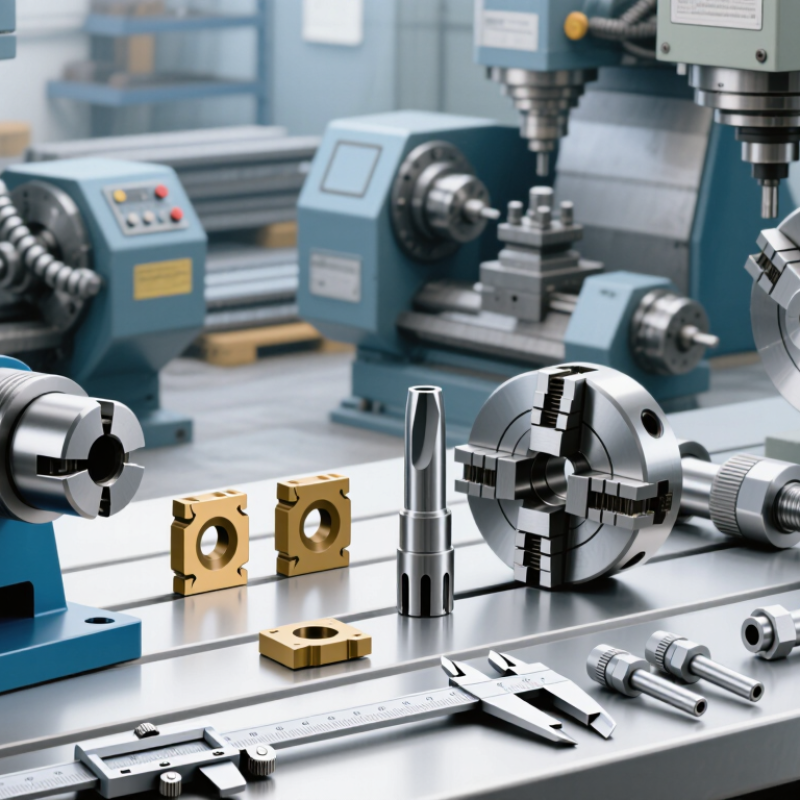
Top Types of Steel Machining Accessories Parts for Buyers

What Steel Machining Accessories Are and How They Support Production

Steel machining accessories are the working links between a machine, a cutting tool, and the workpiece. Common parts include toolholders, collets, chucks, vises, carbide inserts, coolant nozzles, deburring tools, and measurement gauges. Each part controls stability, positioning, chip removal, or inspection. A small runout error can leave visible rings on a turned shaft.

The World Steel Association reported about 1.89 billion tonnes of crude steel production in 2023. That scale creates constant pressure for repeatable machining and shorter setup times. Reliable workholding keeps heavy steel components steady during cutting. Proper toolholders reduce vibration and help maintain cutting accuracy. Coolant accessories direct fluid toward the cutting edge, where heat and chips can damage both tools and surfaces. Simple details matter.

The International Federation of Robotics reported 541,302 industrial robots installed worldwide in 2023. Automation increases the need for accessories with consistent dimensions and predictable tool changes. Buyers should check taper accuracy, clamping force, material hardness, and replacement availability. A fixture may appear universal, yet still flex under load. That assumption is risky. In real production, operators also need quick inspection points, clear adjustment access, and protection from steel chips. Measurement tools are often treated as secondary, but they expose setup drift before rejected parts accumulate. Some accessory choices remain imperfect because production volume, part geometry, and operator skill rarely align neatly.

Main Types of Steel Machining Accessories and Their Functions

Steel machining accessories support accuracy, safety, and repeatable production. Their functions vary with the cutting method, material, and machine structure. Workholding accessories, such as vises, chucks, and clamps, secure the steel piece during milling or turning. A rigid grip reduces vibration and protects the finished surface.

Cutting tools include carbide inserts, drills, end mills, and reamers. Each tool handles a different operation, from hole making to edge finishing. Tool holders keep cutters aligned with the spindle, while collets improve concentricity for smaller parts. Coolant nozzles direct fluid toward the cutting zone and help control heat. Measuring accessories, including calipers, micrometers, and dial indicators, verify dimensions during production. Small errors matter. A tool may look sharp but still produce uneven results after long use.

Tips: Match the accessory to the steel grade, cutting speed, and required tolerance. Check clamping pressure before machining. Excessive force can distort thin parts. Inspect holders, jaws, and cutting edges regularly. Keep measurement tools clean and calibrated. In practice, one setup rarely solves every problem. Reviewing marks, noise, and chip shape can reveal issues that specifications miss.

Top Types of Steel Machining Accessories Parts for Buyers

Main Types of Steel Machining Accessories and Their Functions

The chart compares representative maximum radial runout values for commonly used steel machining tool-holding accessories. Lower runout generally improves tool positioning, surface finish, dimensional accuracy, and tool life. Hydraulic and shrink-fit holders typically provide the highest concentricity, while ER collets and milling chucks offer flexibility for general-purpose machining. Actual performance depends on the holder grade, tool diameter, clamping length, machine condition, and maintenance.

Materials, Designs, and Compatibility with Machining Equipment

Top Types of Steel Machining Accessories Parts for Buyers

Steel machining accessories differ in material, strength, and resistance to repeated cutting loads. Hardened tool steel suits holders, clamps, and locating components exposed to friction. Stainless steel works better where coolant, moisture, or frequent cleaning may cause corrosion. For high-wear contact points, carbide inserts or carbide-tipped parts can maintain a sharp edge longer. However, harder is not always better. Brittle materials may crack when clamping pressure is uneven.

Design affects both accuracy and working speed. A low-profile fixture leaves more space for milling tools and reduces collision risks. Slotted clamps allow flexible positioning, while fixed stops improve repeatability during batch production. Threaded holes should match the machine table and fastening system precisely. Even a small pitch mismatch can damage threads or delay setup. Keep it simple.

Compatibility requires more than checking outer dimensions. Buyers should compare spindle size, tool diameter, maximum load, mounting holes, and operating clearance. A rotary accessory may fit the table but still interfere with the machine enclosure. Coolant channels and chip evacuation paths also deserve attention. Poor chip removal can mark a finished steel surface within minutes.

Before purchase, measure the machine directly instead of relying only on an old drawing. Check hardness certificates, dimensional tolerances, and surface treatment records when available. One common mistake is choosing an accessory by price alone. I have seen inexpensive clamps deform under steady pressure, forcing repeated alignment. The better choice usually balances service life, replacement availability, and actual machine compatibility.

Key Factors Buyers Should Consider When Selecting Accessories

Top Types of Steel Machining Accessories Parts for Buyers

When selecting steel machining accessories, buyers should match each part to the machine, material, and workload. Tool holders need sufficient rigidity for heavy cuts, while cutting inserts must suit steel hardness and heat levels. Clamping accessories should hold the workpiece firmly without leaving deep marks. Small errors here can cause vibration, poor surface finish, or damaged edges.

I have learned that compatibility matters more than appearance. Check shank dimensions, thread sizes, spindle limits, and required tolerances before ordering. Coolant nozzles, chip guards, and workholding supports also deserve attention. They influence visibility, temperature control, and operator safety. A shiny accessory is not automatically a reliable one. Ask for inspection records, material information, and dimensional reports when precision is important.

Cost deserves careful review. A low-priced holder may fit today but wear quickly under repeated steel cutting. I once underestimated replacement time, and the delay cost more than the original saving. Buyers should compare service life, maintenance needs, delivery stability, and technical support. The decision is rarely perfect. Test a small quantity when possible, measure actual tool wear, and record the results. Suppliers who answer technical questions clearly are usually easier to trust, although no supplier should be accepted without practical verification.

Common Applications, Maintenance Needs, and Service Life of Steel Accessories

Steel machining accessories support clamping, positioning, cutting, and material handling in workshops. Common parts include collets, tool holders, vises, fixtures, bushings, and guide rails. Hardened steel suits repeated pressure and abrasive contact. A fixture may hold a shaft while a cutter removes a precise shoulder. Small accessories often decide whether that operation stays stable.

Maintenance needs depend on load, coolant, heat, and cleaning discipline. Wipe chips and coolant from contact surfaces after each shift. Apply a light corrosion-resistant oil to exposed steel. Check jaws, threads, tapers, and locating pins for burrs or uneven wear. A dial indicator can reveal runout that looks invisible by eye. Store smaller parts in dry drawers, not on a damp bench. Over-tightening is a common mistake. It can distort threads and shorten service life.

Service life has no fixed number. A protected fixture may work for years, while a high-speed holder may need earlier replacement. Record cycles, inspection findings, and cutting conditions. Replace parts when accuracy, grip, or surface condition declines. Do not judge only by appearance. That habit needs reconsideration. Proper alignment and moderate tightening usually extend usable life. However, records are not perfect during busy shifts. Review that gap during scheduled inspections.

Top Types of Steel Machining Accessories Parts for Buyers — Common Applications, Maintenance Needs, and Service Life of Steel Accessories

Accessory Part Common Material or Construction Common Applications Maintenance Needs Indicative Service Life Typical Wear or Replacement Signs
Machine vise jaws Hardened alloy steel; often replaceable and ground Holding workpieces during milling, drilling, and light machining Remove chips after use; keep locating and clamping faces clean; check for burrs, cracks, and uneven wear. About 2–5 years in regular shop use; shorter with frequent heavy clamping or abrasive work. Workpiece slipping, damaged gripping surfaces, cracks, or loss of parallelism
Spring collets Heat-treated spring steel, commonly with precision-ground slots and bore Accurate clamping of round tools or workpieces in compatible collet systems Clean the slots and bore; avoid overtightening; inspect contact surfaces and measure runout when accuracy matters. About 6 months–2 years in frequent production use; longer with light use and careful handling. Reduced grip, visible scoring, corrosion, damaged slots, or increasing runout
Tool holders Alloy steel body with a precision-ground spindle taper and tool interface Securing milling cutters, drills, and other cutting tools in a machine spindle Wipe the taper and tool interface clean before installation; protect from impact and corrosion; check for fretting and runout. About 3–10 years under normal conditions; service life depends heavily on handling and spindle condition. Damaged taper, fretting marks, poor retention, corrosion, or persistent runout
Fixture clamps and step clamps Alloy or carbon steel; some clamping faces are hardened Clamping parts and fixtures to machine tables or fixture plates Keep threads and sliding surfaces clean; use suitable lubrication on screws; inspect contact faces and threaded parts. About 5–15 years in general-purpose use; heavy loading, abuse, or corrosion can shorten this range. Stripped threads, bent sections, cracked parts, or worn contact faces
Fixture plates and subplates Stress-relieved steel plate, often machined with a grid of tapped holes or locating features Supporting repeatable workholding setups on milling and drilling machines Clean and protect the surface; remove raised burrs carefully; check flatness and thread condition during setup changes. About 5–15 years or longer when properly supported, stored, and protected from corrosion. Damaged threads, corrosion pits, distortion, or loss of required flatness
Lathe chuck jaws Hardened steel; supplied as hard jaws or machinable soft jaws Gripping round, hexagonal, or custom-shaped workpieces on a lathe Remove chips from jaw teeth and slides; apply a light protective film; check seating and jaw movement. About 1–5 years in regular use, varying with workpiece material, clamping force, and setup frequency. Damaged teeth, uneven gripping, excessive runout, or poor jaw seating
Machine leveling and support pads Steel base or threaded stud, sometimes paired with a separate vibration-isolating element Leveling and supporting machine tools, workbenches, and auxiliary equipment Check level and load distribution; keep adjustment threads clean; inspect for corrosion, deformation, or loose fasteners. About 5–10 years or longer when correctly sized and used within the rated load. Bent studs, damaged threads, unstable support, or visible deformation

Note: Service-life ranges are general planning estimates, not guarantees. Actual life varies with load, cycle frequency, workpiece material, coolant exposure, storage, maintenance, and required accuracy. Follow the machine and accessory manufacturers’ inspection and replacement guidance.

FAQS

What are steel machining accessories?

They connect the machine, cutting tool, and steel workpiece. Common examples include chucks, vises, toolholders, coolant nozzles, and gauges.

How do workholding accessories improve machining?

Vises, chucks, and clamps hold steel steady during cutting. A rigid grip reduces vibration and helps protect the finished surface.

Which accessories help control cutting accuracy?

Toolholders keep cutters aligned with the spindle, while collets help center smaller parts. Even slight runout can leave visible rings on a turned shaft.

Why are coolant nozzles and chip paths important?

They direct coolant toward the cutting edge and help remove heat and chips. Poor chip evacuation can scratch a finished surface quickly.

How should I choose accessory materials?

Hardened tool steel suits parts exposed to friction, while stainless steel resists moisture and frequent cleaning. Carbide handles high-wear cutting edges. Harder is not always better; brittle parts may crack under uneven pressure.

What should I check for machine compatibility?

Compare spindle size, tool diameter, mounting holes, maximum load, and operating clearance. A rotary accessory can fit the table yet still hit the machine enclosure.

How can I spot setup problems early?

Check dimensions with clean, calibrated gauges such as micrometers or dial indicators. Listen for unusual noise and inspect chip shape. Small details matter.

What common buying mistake should I avoid?

Choosing by price alone can be costly. A clamp that deforms under steady pressure may need repeated alignment. I still find this easy to underestimate.

Conclusion

Steel Machining Accessories Parts are essential components that help machining equipment perform accurately, safely, and efficiently. They include workholding devices, cutting tool holders, inserts, collets, clamps, guides, fixtures, and other supporting parts used to position, secure, shape, or finish steel workpieces. Each accessory has a specific function, from improving stability and cutting precision to reducing vibration and supporting faster production. Their design should match the machine type, operating method, workpiece dimensions, and required tolerances.

When selecting steel machining accessories, buyers should evaluate material strength, heat resistance, dimensional accuracy, compatibility, installation requirements, and overall cost. Accessories made from suitable tool steel, hardened alloys, or other durable materials can withstand repeated loads and demanding working conditions. Common applications include turning, milling, drilling, grinding, and automated production. Regular cleaning, lubrication, inspection, and timely replacement of worn components help maintain performance and extend service life. Choosing reliable accessories that fit the equipment properly can reduce downtime, improve product consistency, and support long-term manufacturing efficiency.

Aria

Aria

Aria is a dedicated marketing professional with a deep passion for innovative strategies and a keen understanding of our company's product offerings. With a wealth of experience in the industry, Aria excels at crafting engaging content that highlights the unique features and benefits of our......